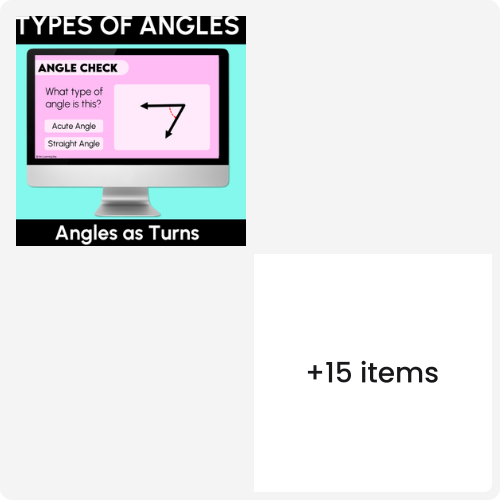
 Identifying & Comparing Angles - Grade 3 & 4 Unit of WorkBundle (18)
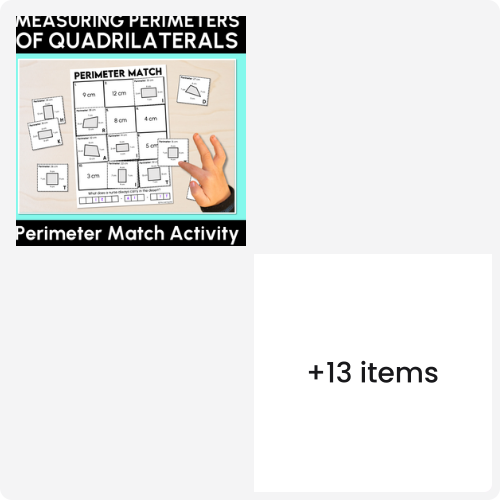 Measuring length in metres, centimetres & millimetres - Grade 3 & 4 Unit of WorkBundle (16)
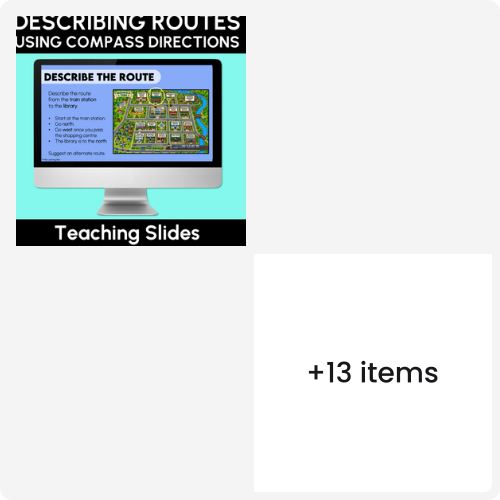 Position: Grid Maps & Directional Language - Grade 3 & 4 Unit of WorkBundle (16)
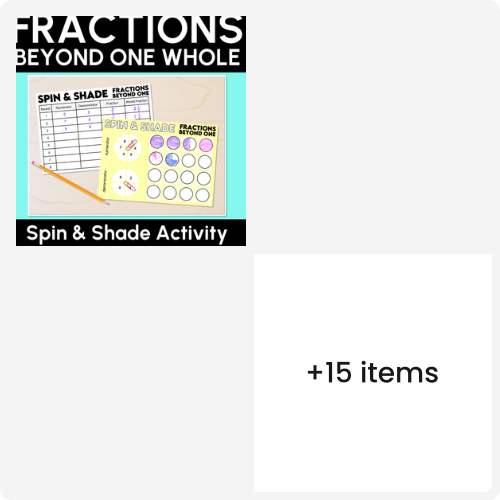 Fractional Quantities Equal To & Greater Than One - Grade 3 & 4 Unit of WorkBundle (18)
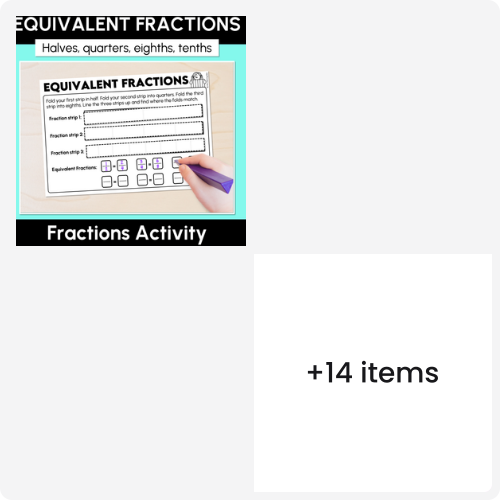 Represent & Compare Equivalent Fractions as Lengths - Grade 3 & 4 Unit of WorkBundle (17)
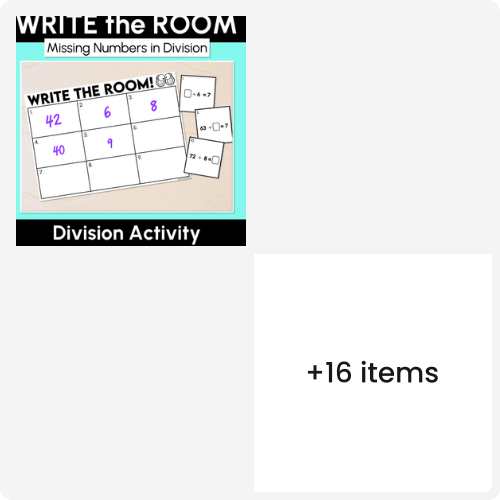 Multiplication & Division Word Problems - Grade 3 & 4 Unit of WorkBundle (19)
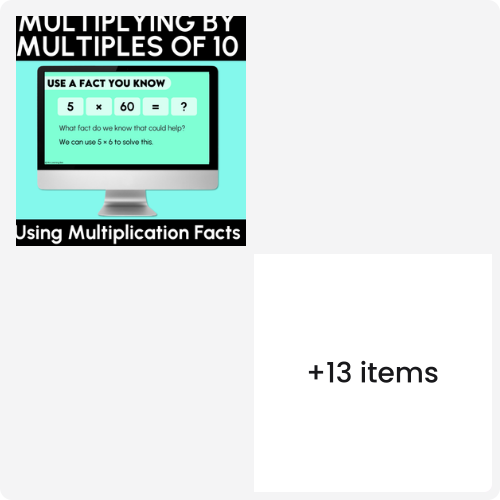 Operating with multiples of 10 - Grade 3 & 4 Unit of WorkBundle (16)
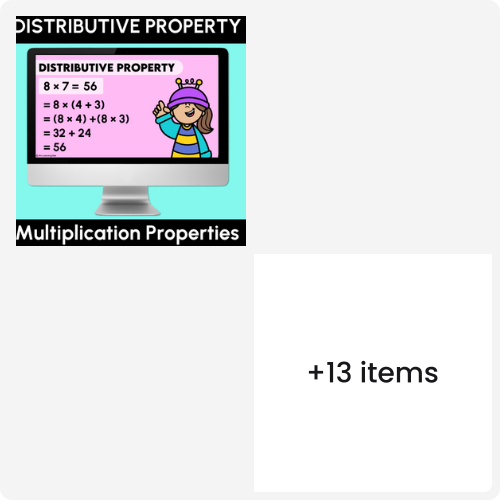 Multiplication & Division: Using the Area Model, Commutative & Associative Properties & Flexible Partitioning - Grade 3 & 4 Unit of WorkBundle (16)
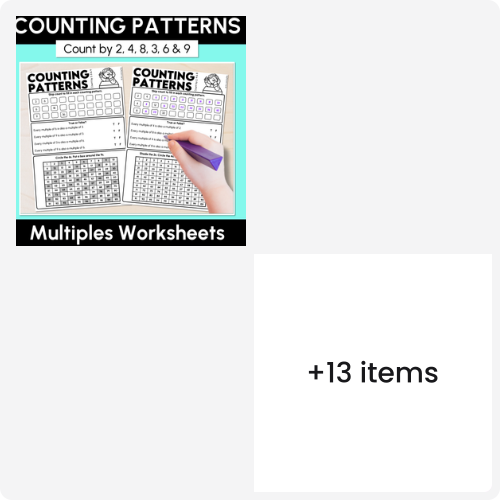 Number Patterns & Multiples - Grade 3 & 4 Unit of WorkBundle (16)
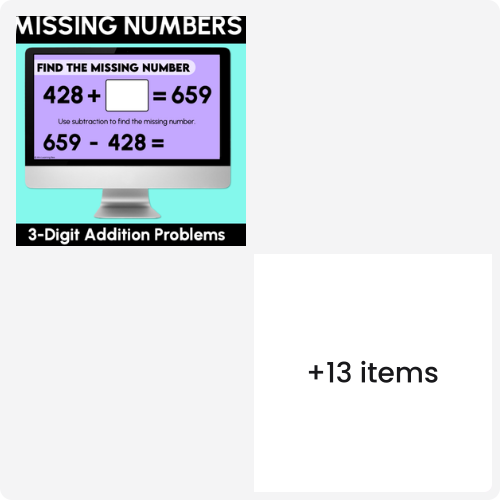 Missing Values in Addition & Subtraction Number Sentences - Grade 3 & 4 Unit of WorkBundle (16)
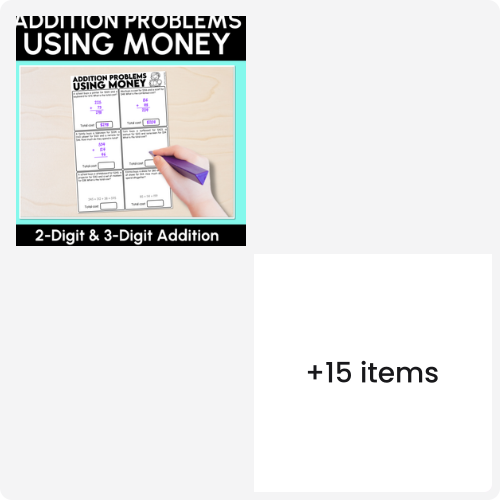 Applying Addition & Subtraction to familiar contexts, including money and budgeting - Grade 3 & 4 Unit of WorkBundle (18)
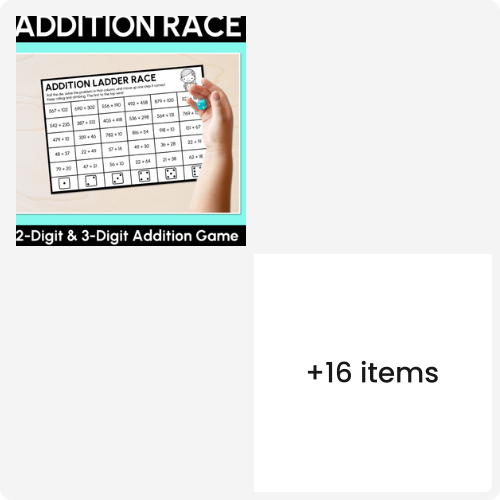 3-Digit Addition & Subtraction: Vertical Algorithms with & without regrouping - Grade 3 & 4 Unit of WorkBundle (19)
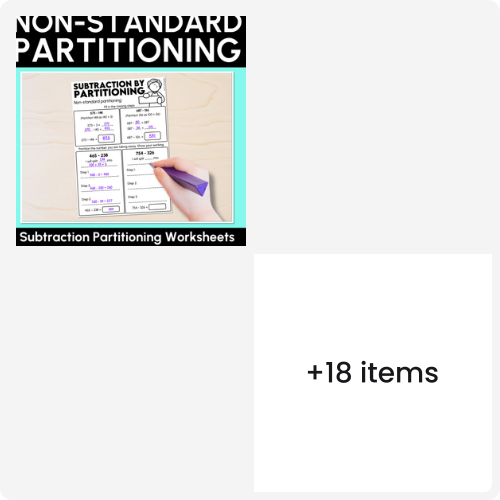 3-Digit Addition & Subtraction: Partition, Rearrange & Regroup Numbers - Grade 3 & 4 Unit of WorkBundle (21)
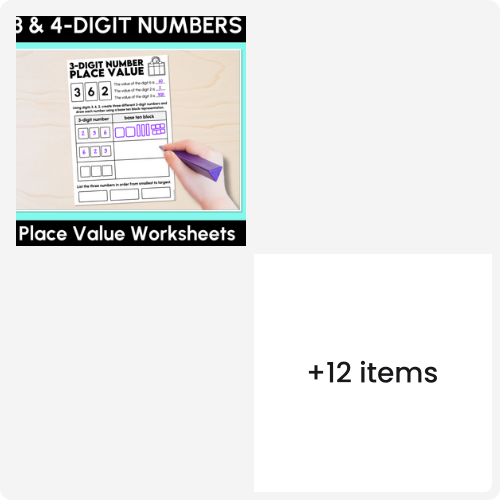 3-Digit Place Value and Partitioning - Grade 1 & 2 Unit of WorkBundle (15)
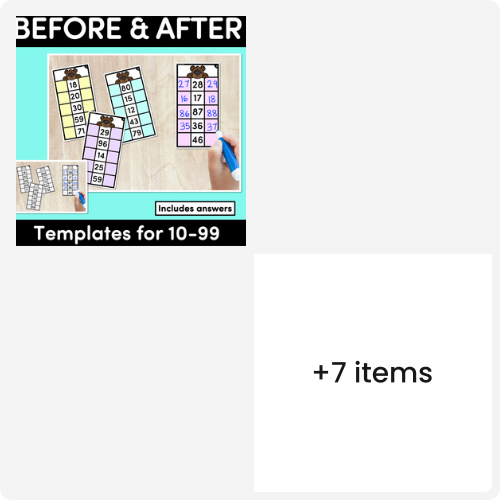 Represent Numbers on a Line - Grade 1 & 2 Unit of WorkBundle (10)
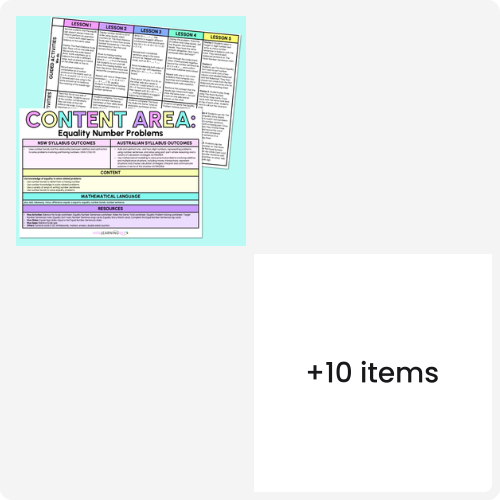 Equality Number Problems - Grade 1 & 2 Unit of WorkBundle (13)
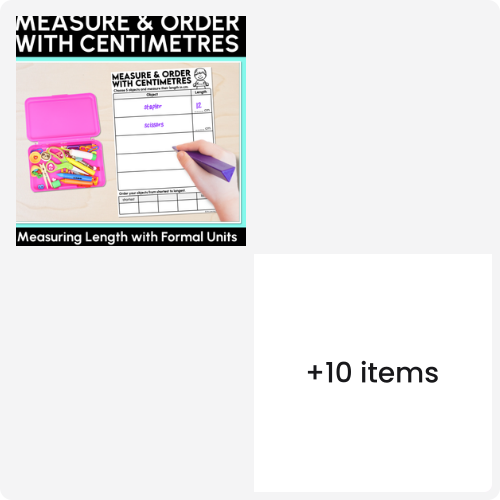 Measuring Length with Formal Units - Grade 1 & 2 Unit of WorkBundle (13)
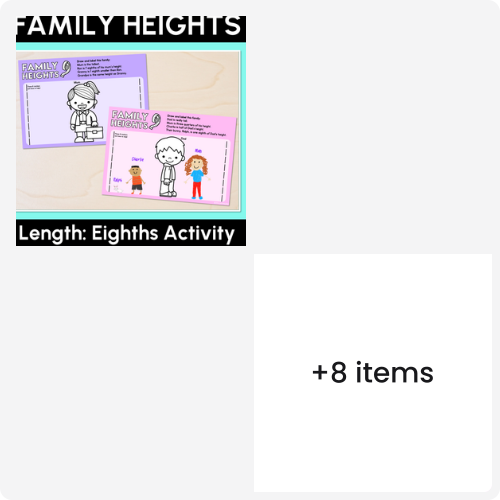 Halve Lengths to Form Eighths - Grade 1 & 2 Unit of WorkBundle (11)
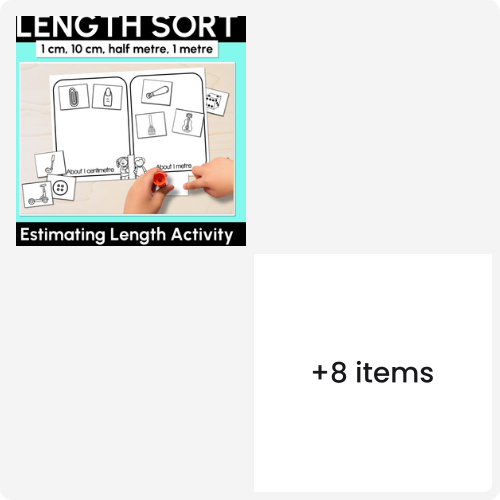 Compare & Order Lengths Using Appropriate Informal Units - Unit of WorkBundle (11)
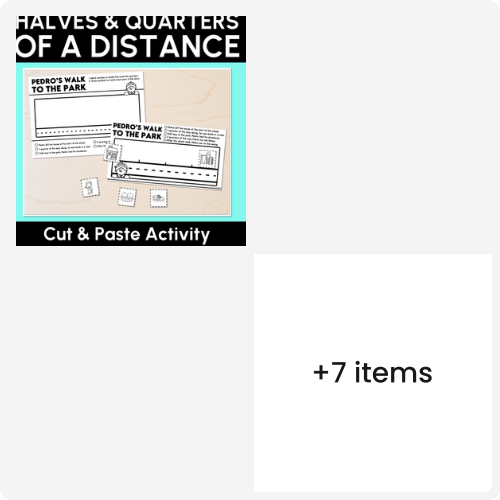 Length: Halves & Quarters of Lengths - Grade 1 & 2 Unit of WorkBundle (10)